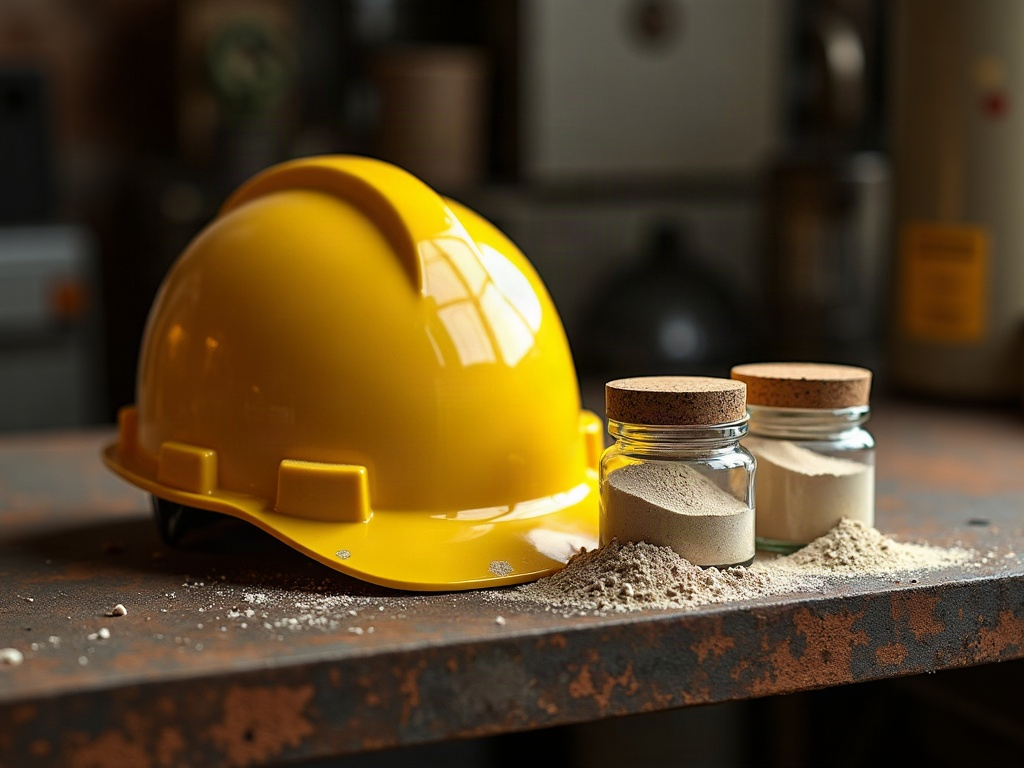
What a paid plant trial is (and what a free sample is not)
A paid pilot is not a demo, a POC deck, or a free sample. It is a buyer spending real money to answer one question. Here is how to tell the difference and why it matters for your next raise.
The First Yes Desk
Editorial
The phrase "pilot" gets stretched to cover everything from a lunch meeting to a signed supply agreement. That vagueness costs founders real money, because a vague pilot is easy to agree to and impossible to bank. Let us be precise.
A paid pilot is a buyer spending money to answer one question
The three words all carry weight.
Paid. The buyer covers something real: their people's time, their line, the trial quantity, or all three. Payment is not about the revenue. It is proof that someone with budget authority decided the question was worth answering. A free sample proves nothing except that shipping is cheap.
Pilot. It is bounded. There is a start, an end, a defined quantity, and a defined site. It is not an open-ended "let us keep testing." Open-ended means no decision, and no decision means no signal.
One question. The best pilots resolve a single, pre-agreed metric. Does the sealer cut water uptake by half? Does the admixture hold slump for ninety minutes? A pilot that tries to prove ten things proves none.
What a paid pilot is not
- A proof-of-concept deck. Slides describing what would happen are not a pilot. They are a hypothesis.
- A free sample drop. Sending material with no agreed metric and no committed evaluator is a donation, not a trial.
- A pen test of your patience. If the buyer keeps "evaluating" with no defined endpoint, you are subsidizing their R&D. Name the endpoint or walk.
- An LOI. A letter of intent is a nice signal and a weak one. It costs the signer nothing.
Why the distinction changes your valuation
Investors have learned to discount soft signals to near zero. "In conversations with three of the top five cement producers" means nothing, and sophisticated investors know it. But "CRH is running a paid trial of our admixture at a named plant, with a go/no-go decision in Q3" is a fact with a date attached. It survives diligence because it is checkable.
The difference between "in talks with" and "running a paid trial" is the difference between a story and an asset.
The anatomy of a pilot worth running
A pilot that produces a bankable result has five parts, agreed in writing before anything ships:
- 1The material and quantity. Exactly what you send, and how much.
- 2The site and the evaluator. A named plant and a named person who owns the result.
- 3The protocol. How it is applied, run, and measured, including the control.
- 4The success metric. The number that makes it a yes, agreed by both sides up front.
- 5The follow-on. What a yes unlocks: more volume, a license, a distribution test.
If any of those five is missing, you do not have a pilot. You have a conversation that feels like progress.
The follow-on is the whole point
A pilot is not the destination. It is the on-ramp. A clean yes should have a pre-agreed next step, so that success is not followed by six months of renegotiation. And a clean no is still valuable: it is a specific, technical reason you can take to your next buyer, or back to the bench.
At First Yes, we structure the pilot before we make the introduction, so both sides know what a yes and a no are worth on day one. That is what turns a trial into a result you can build on.
Put it to work
See how close you are to a first paid pilot.
The score is free and takes two minutes. It scores you on the four things a buyer checks first.
Take the readiness scoreKeep reading